Showing posts with label classics. Show all posts

Monday, September 30, 2013

The One True Groupset

To celebrate Rui Costa's win in the World Championship, we offer the following tribute.

Fellow Brothers and Sisters in Campagnolo, let us pray. 

Dear Santo Tullio, since 2009 when Cuddles Evans won the World Championship thanks to his seamless multi-gear shifting up the final hill in Mendrisio, Swizzera, our faith surely has been tested. His win in the 2010 Giro d'Italia's muddy epic stage notwithstanding, was followed by the Great Twin Betrayals of BMC and QuickStep as they switched away from Campagnolo. 

We thank You for rewarding our faith last Sunday with the World Championship win of Rui Costa, of the Most Campagnolo Team of Movistar -- formerly known as Caisse d'Epargne, formerly known as Banesto, formerly known as Reynolds. 

Please guide your Apostle / Team Manager / Directeur Sportif Eusebio Unzué, who has guided Delgado, Indurain, Jiménez, Rodriguez, and Valverde, as he seeks to find new sponsorship for his team. May Unzué continue to be faithful to the One True Groupset. 

In the name of Santo Tullio, and His Son Eddy Merckx, and the Holy Delta Brakes we pray, Amen. 
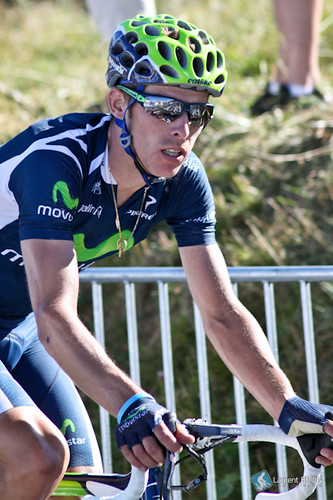
Photo by Petit Brun shared under by-nc-sa 2.0.

Tuesday, March 26, 2013

Super Mario in Gent-Wevelgem

Peter Sagan's charismatic win in Sunday's Gent-Wevelgem was superb, sign of a true champion who knows when to take charge and when to push for the win. While many expected him to wait for the final sprint, he put in more than his fair share in a break of 13 riders, and left them all in the dust by attacking away. In the end, he had a 23-second advantage in a race that had been threatened with cancellation just hours prior.

His win reminded us of "Super Mario" Cipollini's three wins in Gent-Wevelgem: in 1992, 1993, and 2002. His first win was perhaps the most amusing one (Watch video starting at 1:55). What was to be a formality -- a field sprint -- had "Tashkent Terror" Djamolidine Abdoujaparov pull on Cipollini's seat post as Cipo was surging past him. The tug was enough to push Abdou ahead of Cipollini, however Cipo kept his cool and raised his arms in celebration anyway.

"I knew he'd get penalized," he said calmly.


Cipo's 1993 win was straightforward: he simply hit the gas and sprinted literally from the front, nobody was able to get around him.


Friday, March 15, 2013

Is Milano-Sanremo really a sprinters race?


In modern times this race has been billed as the "sprinters' classic," despite it having a series of sharp hills near the finish. This, after nearly 300 km of racing. Whether MSR comes down a field sprint is itself a difficult question to answer.

Curious to see whether and  how the sprinters' grip has strengthened, we look at whether the race ends in a sprint, starting from the 1960 edition to recent years. Which by the way, we don't view as having ended in a field sprint due to a very splintered front group. After some tweaking, we ended up with the following plot.

Does Milan-Sanremo end in a field sprint?

Thursday, March 14, 2013

The Roads to Milano-Sanremo

The latest freezing spell - blanketing snow on western Europe - had thrown a wrench into the preparation of many aspirants to the throne of Milano-Sanremo (MSR). It started with the change of day, from Saturday to Sunday. Suddenly, Belgium's little known Wednesday race the Nokere Koerse appeared to be the perfect last test before the lineup in Milan. Alas, snow forced cancellation of the event.

In previous post we have thought of how the pre-season, or early season, has changed. Which roads have the winners of Milano-Sanremo taken? We start with the latest, in 2012, when cheeky Australian Simon Gerrans won. He started his year with hard riding down under, including the Tour Down Under (TDU) and the various Aussie road races. Taking a break from racing, he resumed competition only in Paris-Nice (PN) on his way to victory.

Road to Samremo 2012.
On the other hand, second place Fabian Cancellara went to do the Tours of Qatar/Oman (TQO), then after some break from racing he went to Strade Bianche (SB), Tirreno-Adriatico (TA), and finally MSR. Third placer Vincenzo Nibali and fourth placer Peter Sagan, teammates in Team Cannondale, did nearly the same thing, although both skipped Strade Bianche. The fifth rider John Degenkolb did the harder route, from Qatar/Oman to Omloop Het Nieuwsblad to Paris-Nice.

Thursday, February 21, 2013

Tour Down Under, Tour of Qatar, and the early season to de Omloop

Fans of the classics: as if the snow blanket of winter had lured us to complacency, the Omloop Het Nieuwsblad (OHN) is nearly upon us already. Hailed as the opener of the Belgian classics races (some other nations have had their opening races by then), we wonder the impact of emerging early season races in warmer climates on the OHN. More specifically, we wish to compare the importance of Tour of Qatar (ToQ) and Australia's Tour Down Under (TDU) on the performance of classics warriors who have done well in the OHN.

In order to do this, we made a list of wielrenners who finished in the top 5 of the OHN from 2008 to 2012 and empirically compute the correlation of their performance and their attendance at the TDU and ToQ. What are we able to find out? Read on.


Wednesday, October 3, 2012

What The Rainbow Misses in Paris-Tours


With a high-speed crash putting an end to Philippe Gilbert's chase of an exclusive Worlds-Lombardia double, Gilbert won't be showing up at the start line of Paris-Tours. It is too bad, because if he wins it he might be the first to ever accomplish the double of Worlds and Paris-Tours.

For a race that is officially considered a “classic”, Paris-Tours is perhaps the least prestigious among them—but that doesn’t mean it’s not important. Indeed, that it is absent from his list of 19 monuments and classics wins, Eddy Merckx cannot say that he’s won every classic.


Paris-Tours' first edition in 1896 was central France’s answer to Paris-Roubaix. The first edition followed a fairly flat course to Tours. Quickly it became known as the “Sprinters Classic”. In an effort to make it more interesting, derailleurs were banned for two years (1965 and 1966) and riders were only allowed two gears. Still, not content with what was thought to be a predictable finish, the organizers reversed the route in 1974, starting from the Tours area to somewhere in the vicinity of Paris. In 1988 the organizers decided to again reverse the route to start in Paris and end in Tours.

Thursday, September 27, 2012

The Rainbow in Lombardia

Philippe Gilbert (BMC)'s victory in the World Championship in Valkenburg heralded his return to winning ways. Following his two stage wins in the Vuelta a Espana, his blistering attack on the last ascent of the Cauberg opened a huge gap immediately and put the chasers into indecision. Now that he will be sporting the Rainbow Jersey for the next year, what other races are left for him to win this year?

Photo by corto.maltese, licensed under CC BY-NC-ND 2.0.

Fear not, for we still have Paris-Tours and Giro di Lombardia: both races he has won in the past. How will the Rainbow Jersey fare in these two races? Read our preview here and read on below for our history of the Rainbow Jersey and the fall classics.


Monday, September 17, 2012

2012 World Championship Road Race Preview


The coming World Championship in the Limburg, the Netherlands, has parcours similar to the classic race Amstel Gold.  As usually the case, it is an attrition-style long course. While it is true that the course contains the dreaded Cauberg climb as it nears the finish - it can be a death knell for the ambition of many pure sprinters - it is hard to predict how the race will go.

For one thing, the distance from the final climb to the finish line is changed enough that we think it will have a significant impact that rouleurs might make it to the finish. Or even rouleur-like sprinters.


Read on as we share our observations and historical lessons from the last two times the race was run here.

Wednesday, August 29, 2012

2012 Fall Classics Preview


With the end of the Tour de France and Olympic cycling competitions, we turn our attention to the Fall Classics, perhaps the lesser cousins of the Spring Classics. What races do we look forward to? We preview the World Championship, Il Lombardia, Paris-Tours, and discuss the issues plaguing GP Ouest France-Plouay, and fall classics in general.

World Championship in Limburg

World Championship in the Limburg, the Netherlands, has parcours similar to Amstel Gold.  As usually the case, it is an attrition-style long course. While it is true that the course contains the dreaded Cauberg climb as it nears the finish - it can be a death knell for the ambition of many pure sprinters - it is hard to predict how the race will go. For one thing, the distance from the final climb to the finish line is changed enough that we think it will have a significant impact that rouleurs might make it to the finish.

Or even rouleur-like sprinters.


Unlike in the Olympics, the top teams are allowed to field 9 riders for the Worlds elite men road race. Clearly the home Netherlands team would love to win this one, and they might just have the numbers for it if not a clear contender. Cavendish might like to be the designated leader for team GB again, but his team is not likely to have Bradley Wiggins on the roster. Team Italy has been unusually quiet, even though Damiano Cunego former winner of Amstel Gold might be quietly preparing for this race. Whether coach Paolo Bettini will select him as team leader is not clear.

Friday, August 10, 2012

Fall Classics: What We Look Forward to in 2012

With the end of the Tour de France and Olympic cycling competitions, we turn our attention to the Fall Classics, perhaps the lesser cousins of the Spring Classics.  What do we look forward to this Fall? There are a few factors that brings us more excitement than usual. In this post we first discuss these factors and we will follow up with short race previews.

Loire Valley in Fall.

Thursday, July 26, 2012

2012 Olympics Road Race Preview

Surely Great Britain (GB) sprinter Mark Cavedish (Team Sky)'s stage wins in the Tour de France have earned him top listing in most sports bets to win the Olympics Road Race on his team's home roads in London. With Team Sky effectively acting as the surrogate GB national team, that means that they have honed their sprinting train in the TdF. London's course has earned a reputation as being flat, and therefore would be advantageous for a sprinting team.

Photo by SurreyNews.  Distributed under CC BY-ND 2.0.

But poring over maps and profiles doesn't bring one closer to the experience and insight from riding it. For that, we tip our helmet to Fabrizio Viani who is a London local sharing his experience on his excellent blog.

What does it take for Mark Cavendish to win, or conversely, what does it take to beat him? Here's our take on the race, and predictions of the race.

Friday, April 27, 2012

Once Upon a Time on the Tenbosse

Once upon a time on the Tenbosse climb, we were suffering up the hill deep into the Ronde van Vlaanderen cyclosportive. We only had another 30 km to go to the finish, and 3 more climbs. But the day was starting to feel long and heavy on our legs.

While we were grunting on a very little 34x25, an old man was spotted up ahead, on the top of the climb. A hat, elbow patches, and grocery bags. Our eyes locked, and he immediately understood the size of the cross we were bearing, and its weight. He immediately dropped his bags, hurried down, and pushed us up the climb.

Photo by FaceMePLS, under CC BY 2.0.
The day after, Stijn Devolder launched his winning move exactly from the Tenbosse.

Thank you Old Belgian Man, for understanding our sport of cycling. Lieve Vlaanderen!

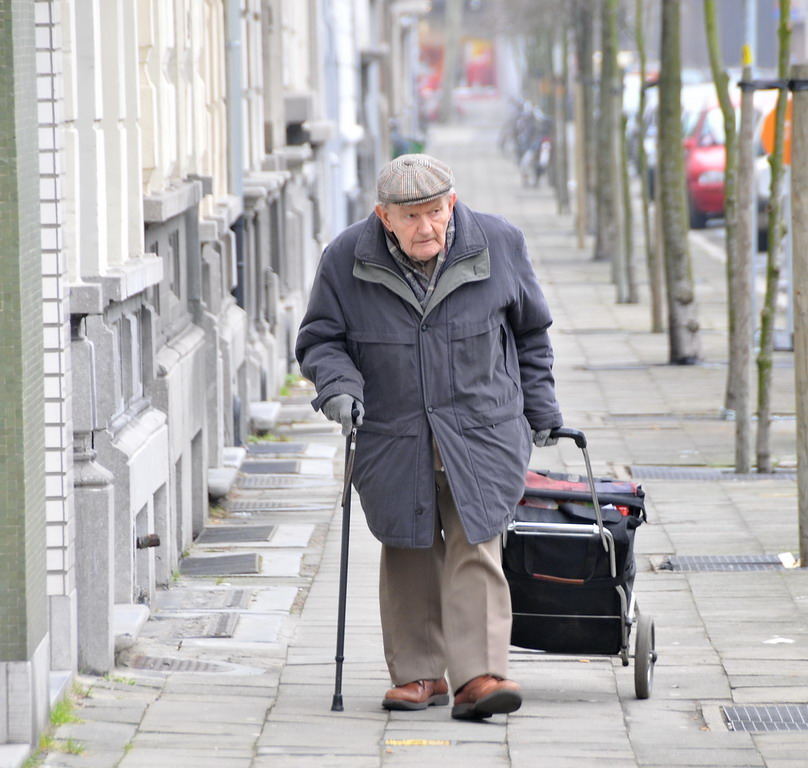
In case you are wondering, that photo is not of that old man. We had much suffering and didn't take a picture.

Thursday, April 19, 2012

La Doyenne: Liège–Bastogne–Liège 2002-2011

In the beginning there were monuments, the oldest of the races. Liège–Bastogne–Liège, nicknamed "la doyenne" or "old woman" in French, is the oldest of the monuments, although it wasn't the oldest of all the bike races; but that's another story. It was started in 1892 by a Belgian newspaper L'Expresse for promotions, much like how the much younger Tour de France was started by the newspaper L'Auto in France 10 years later in 1902. So much for most thinking that le Tour was the oldest of bike races.

Tuesday, April 17, 2012

La Flèche Wallonne and Brabantse Pijl: Separated at Birth

Gentle readers, those of you who speak French and/or Flemish/Dutch may have noticed the symmetry between the two races La Flèche Wallonne (or Waalse Pijl) and Brabatse Pijl (or Flèche Brabançonne). These two races have symmetrical names in the two languages. How did this come about and what can we learn about Belgium from this elegant symmetry?
Belgium, its Communities, and a few races.
In two previous articles (click here for Fleche Wallonne/FW and here for Brantse Pijl/BP), we talked about how some of these one-day races came into being and how they came to be placed to each other. Today non-Belgians tend to think of Belgium in terms of the two communities, Flanders and Wallonia (there is actually a third community for German-speakers, but it is very very small). Both communities are described in terms of their primary languages, and both have their capital in Brussels.


Tuesday, April 3, 2012

Riding to Victory: Paris-Roubaix 2002-2011

As analysis nerds and classics dorks, we are intensely interested in learning how races are won and how victories are earned. While we realize that the route of Paris-Roubaix has changed a bit over time, we think that a narrative graphic of how recent editions have been won is insightful.

In the following, we show how the winner of each edition progresses to victory as each race is run: the height of the bar goes up as the winner's chance of victory is increased with each move. Without further ado, we offer the following graphic (download for better viewing).

Thursday, March 29, 2012

Why not have your Pavé and eat it, too: the 2012 Ronde van Vlaanderen

There is much consternation among fans regarding the removal of the Muur de Grammont / Muur de Geraardsbergen  / Kappelmuur from the parcours of the 2012 Ronde van Vlaanderen (RvV). Race organizers cite the wish to move the finish to a more suitable location, and a more uncertain finale, as the main reasons.

Regardless, we think that this year's race is more of an attrition race, and we share our thoughts below. And while we think that wanting to have the RvV finish is Oudenaarde is a reasonable line of thinking, we can't help but suggest a few things that could be done better: why not have your pavé and eat it (or ride on it) too by including the Muur in a race that finishes in Oudenaarde.

Exhibit A: old finish of de Ronde from Bosberg to Ninove

In a previous post we examined how the past 10 editions of de Ronde played out. It can't be denied that on half the occasion the Muur played a pivotal role in re-shuffling the cards the race had dealt up to that point.


Monday, March 26, 2012

Riding to Victory: Ronde van Vlaanderen 2002-2011

As analysis nerds and classics dorks, we are intensely interested in learning how races are won and how victories are earned. While we realize that the route of Ronde van Vlaanderen (RvV)'s route is changed for this year, we think that a narrative graphic of how recent editions have been won is insightful. After all, the argument for change was that it was becoming predictable. We mourn the loss of the Muur de Grammont, which many call the hand that shuffles the cards through which the game of racing is played.

The Muur and the RvV route had stayed fairly constant in the past decade. In the following, we show how the winner of each edition progresses to victory as each race is run: the height of the bar goes up as the winner's chance of victory is increased with each move. Without further ado, we offer the following graphic.

Monday, March 19, 2012

What I Love About Milan-San Remo

Editor's note: Today's update is a guest post from former Pavé editor Mattio. Follow him on Twitter at @_mattio.

What I love about Milan-San Remo is its devastating simplicity.
The Cipressa is not a hard climb. The Poggio is not a hard climb. I've done neither, granted, but I've looked at the maps and the charts and the figures. The Poggio is less than 4k, at less than a 4% grade. These are no alpine slopes, no devastatingly steep hellingen. But they come toward the end of almost 300 kilometers.
That makes Milan-San Remo extremely simple and utterly treacherous to predict. Put the Poggio, its descent, and the remaining handful of kilometers at the end of 220 or even 250 kilometers, and a field sprint is a safe bet. Stretch it out to Milan-San Remo's full 298 kilometers and we start to wonder, don't we?
Vicenzo Nibali attacked on the Poggio and didn't open up much space. He was joined by Gerrans and Cancellara and they crested the hill and began that twisting descent with 4 seconds over the pack. Four seconds! Led by Cancellara's diesel the trio held of the small chase group, finishing just two seconds ahead. Two seconds!
As the longest race on the pro calendar, Milan-San Remo has the distinction of being able to claim that its distance truly wears riders down to the point where a hill that would be damn near inconsequential elsewhere becomes decisive. It can boast that this as the potential for anything ranging from a solo finish to a field sprint. It's this variability that makes it La Classicissima.

A good writer will tell you that simplicity has the most profound effect. So too it is with Milan-San Remo.

Friday, March 16, 2012

Watching the 2007 Milan-Sanremo in Boston


In 2007 I made special effort to go to Cafe dello Sport in the Italian part (North End) of Boston, after calling them the day before if they would show Rai Due during La Primavera.

I came early that morning, with my girlfriend at the time. The shopkeepers mumbled something in Italian and English about some crazy dude (me) who had called the day before and insisted on Milano-Sanremo. A table next to ours had two elderly Italian gentlemen with the unmistakable pink of Gazetta dello Sport. They had hats on, steaming cappuccino, and that sage nod that only people beyond a certain age can muster.


Another table had a young Italian dad and a very young baby daughter. The dad was telling the daughter what a beautiful race it was, how colorful the peloton was, and where the race was in bella Italia.

Smug with satisfaction at how delightful this time-space was, I ordered cappucinos and canolis.

The table next to mine was full of Boston yuppies, chatting happily but barely paying attention to the race. During a lull in the race, one asked me, "How's Levi doing in the race?"

I can't recall what I said in reply, but girlfriend at the time said she never saw me show such mixture of confusion and anguish on my face.

Thursday, March 15, 2012

La Primavera: the 2012 Milan-Sanremo

Much has been said of Mark Cavendish's strong form and strong team ahead of Milan-Sanremo, nicknamed "La Primavera" in Italian. To win in MSR requires discipline in winter: indeed, it is the longest classic at just around 300 km. It is characterized by a long, slow slog down the Tirrenean coast, a hectic pace up the capi or hills, a daredevil curvy downhill, and finally just enough finishing straight to encourage a sprint finish. Over its life the race has added more and more hills: the Poggio in 1960, the Cipressa in 1982.

Percorsa of the 2012 Milano-Sanremo.
In a previous article we compared the capi of MSR to that of the Climbers' classic Liège-Bastogne-Liège. In this post we examine how the race has changed in modern times, and give a bold suggestion to pretenders to the crown of La Primavera based on our analysis. We sail forth in Adriatic sea with three questions in mind. (1) Is Milan-Saremo really a sprinters' classic? (2) Who are the contenders for 2012? and (3) What advice can we offer from our analysis?